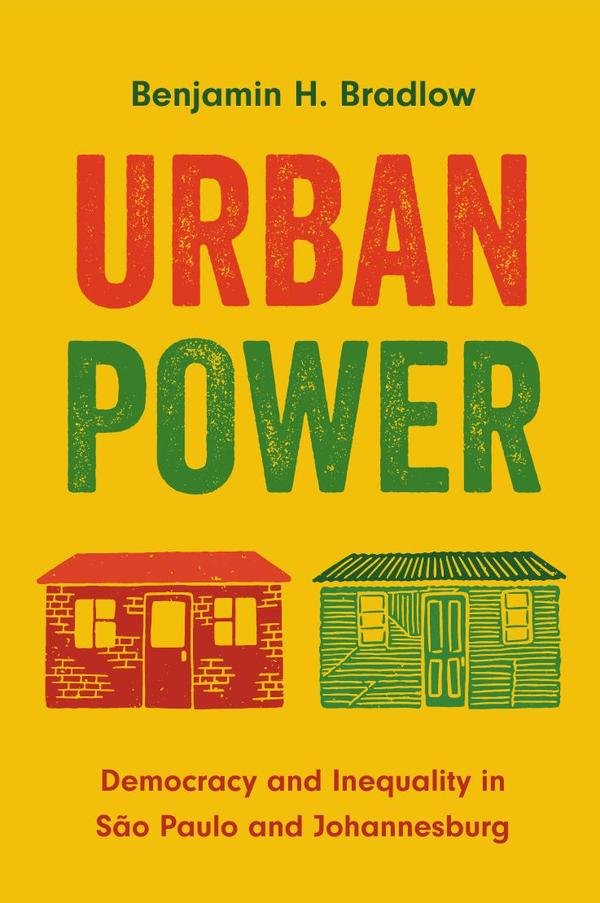
Urban Power: Democracy and Inequality in São Paulo and Johannesburg

$116,295

38 Artículos vendido en el último 3 meses
Pídelo hoy y recíbelo aprox. entre el 26 de jun y el 30 de jun
  • Pago 100% seguro
  • Envío con seguimiento
  • Compra protegida

Desliza para ver más

Envío estimado

Recibe tu libro en 5 a 12 días hábiles, según ciudad y disponibilidad.

Envíos a Colombia

Despachamos a ciudades principales y municipios con aliados logísticos confiables.

Empaque protegido

Tu pedido viaja cuidadosamente empacado para que llegue en buen estado.

Compra protegida

Te acompañamos antes, durante y después de recibir tu libro.

Medios de pago aceptados: Visa, Mastercard, American Express, Diners Club, Apple Pay, Google Pay y PSE — pagos protegidos por Stripe
3 ¡Personas viendo este producto ahora!
Descripción

Why some cities are more effective than others at reducing inequalities in the built environmentFor the first time in history, most people live in cities. One in seven are living in slums, the most excluded parts of cities, in which the basics of urban life—including adequate housing, accessible sanitation, and reliable transportation—are largely unavailable. Why are some cities more successful than others in reducing inequalities in the built environment? In Urban Power, Benjamin Bradlow explores this question, examining the effectiveness of urban governance in two “megacities” in young democracies: São Paulo, Brazil, and Johannesburg, South Africa. Both cities came out of periods of authoritarian rule with similarly high inequalities and similar policy priorities to lower them. And yet São Paulo has been far more successful than Johannesburg in improving access to basic urban goods.Bradlow examines the relationships between local government bureaucracies and urban social movements that have shaped these outcomes. Drawing on sixteen months of fieldwork in both cities, including interviews with informants from government agencies, political leadership, social movements, private developers, bus companies, and water and sanitation companies, Bradlow details the political and professional conflicts between and within movements, governments, private corporations, and political parties. He proposes a bold theoretical approach for a new global urban sociology that focuses on variations in the coordination of local governing power, arguing that the concepts of “embeddedness” and “cohesion” explain processes of change that bridge external social mobilization and the internal coordinating capacity of local government to implement policy changes.

Información adicional
AutorBenjamin H. Bradlow
EditorialPrinceton University Press – 30
IdiomaInglés
Valoraciones (0)

Valoraciones

No hay valoraciones aún.

Sé el primero en valorar “Urban Power: Democracy and Inequality in São Paulo and Johannesburg”

Tu dirección de correo electrónico no será publicada. Los campos obligatorios están marcados con *

Tiempos de entrega

INFORMACIÓN SOBRE TIEMPOS DE ENTREGA

Tiempos de entrega

Los tiempos de entrega pueden variar según:

  • País o ciudad de destino

  • Disponibilidad del producto en el sistema de Bibliomanager

  • Capacidad logística del transportista asignado

En general, los envíos suelen tardar entre 5 y 12 días hábiles, dependiendo de la ubicación del cliente.
Los tiempos son estimados y pueden variar por factores externos (clima, eventos locales, fechas especiales, etc.).