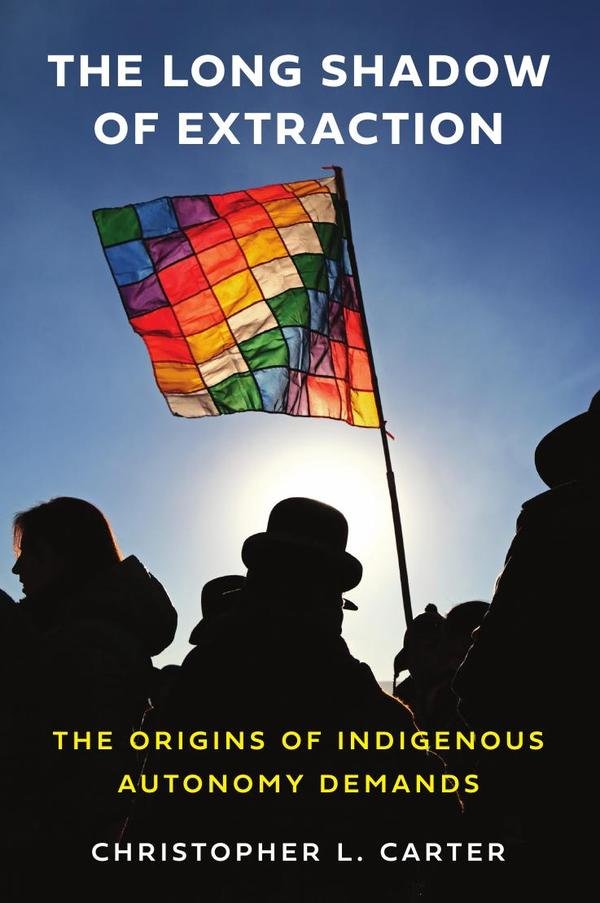
The Long Shadow of Extraction: The Origins of Indigenous Autonomy Demands

$125,250

34 Artículos vendido en el último 3 meses
Pídelo hoy y recíbelo aprox. entre el 25 de jun y el 29 de jun
  • Pago 100% seguro
  • Envío con seguimiento
  • Compra protegida

Desliza para ver más

Envío estimado

Recibe tu libro en 5 a 12 días hábiles, según ciudad y disponibilidad.

Envíos a Colombia

Despachamos a ciudades principales y municipios con aliados logísticos confiables.

Empaque protegido

Tu pedido viaja cuidadosamente empacado para que llegue en buen estado.

Compra protegida

Te acompañamos antes, durante y después de recibir tu libro.

Medios de pago aceptados: Visa, Mastercard, American Express, Diners Club, Apple Pay, Google Pay y PSE — pagos protegidos por Stripe
10 ¡Personas viendo este producto ahora!
Descripción

How resistance to extraction shaped Indigenous demands for autonomy, integration, or assimilationFrom the onset of colonialism, Indigenous communities have faced seizure of their land, labor, and resources by non-Indigenous actors. In The Long Shadow of Extraction, Christopher Carter argues that the native groups’ resistance to extraction took distinct forms, and that this variation explains why some communities demanded autonomy while others demanded integration or assimilation. Countering existing scholarship that assumes a universal demand for autonomy, Carter shows that some Indigenous communities in fact refused government offers to recognize their local political authority and longstanding economic institutions.Carter argues that contemporary Indigenous demands were forged in early twentieth-century efforts to resist extraction. Drawing on two emblematic Latin American cases, Peru and Bolivia, Carter shows that in communities where traditional Indigenous leaders organized resistance, ethnic mobilization occurred and gave rise to enduring demands for autonomy, or state recognition of Indigenous identities and institutions. In communities where unions and leftist parties organized resistance, class-based mobilization became the norm. This led communities to reject autonomy and demand instead integration (state recognition of Indigenous identities but not Indigenous institutions) or assimilation (state recognition of neither Indigenous identities nor institutions). Carter’s groundbreaking account of Indigenous resistance has important implications for understanding not only the historical emergence of autonomy but variations in identity-based mobilization in multiethnic democracies.

Información adicional
AutorChristopher L. Carter
EditorialPrinceton University Press – 30
IdiomaInglés
Valoraciones (0)

Valoraciones

No hay valoraciones aún.

Sé el primero en valorar “The Long Shadow of Extraction: The Origins of Indigenous Autonomy Demands”

Tu dirección de correo electrónico no será publicada. Los campos obligatorios están marcados con *

Tiempos de entrega

INFORMACIÓN SOBRE TIEMPOS DE ENTREGA

Tiempos de entrega

Los tiempos de entrega pueden variar según:

  • País o ciudad de destino

  • Disponibilidad del producto en el sistema de Bibliomanager

  • Capacidad logística del transportista asignado

En general, los envíos suelen tardar entre 5 y 12 días hábiles, dependiendo de la ubicación del cliente.
Los tiempos son estimados y pueden variar por factores externos (clima, eventos locales, fechas especiales, etc.).