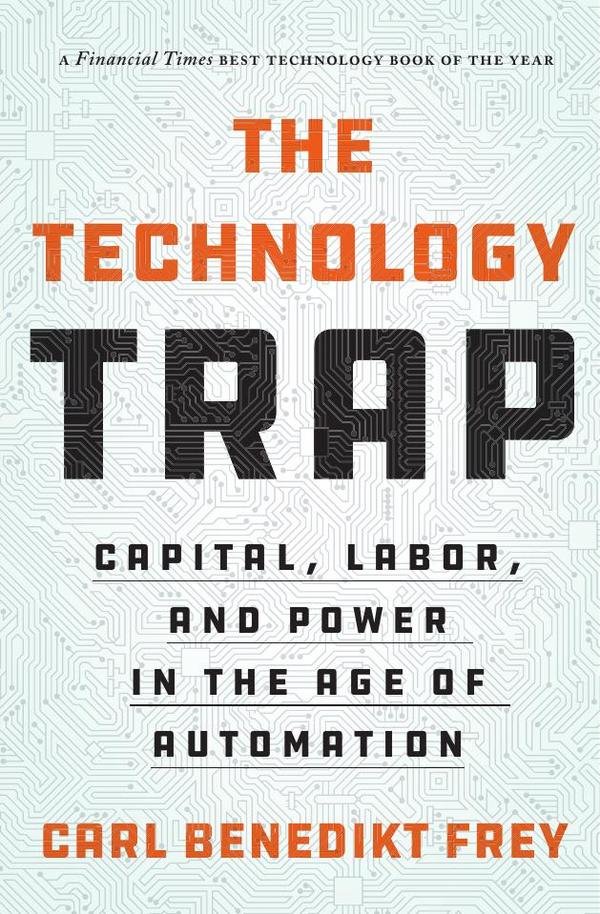
The Technology Trap: Capital, Labor, and Power in the Age of Automation

$159,895

27 Artículos vendido en el último 3 meses
Pídelo hoy y recíbelo aprox. entre el 26 de jun y el 30 de jun
  • Pago 100% seguro
  • Envío con seguimiento
  • Compra protegida

Desliza para ver más

Envío estimado

Recibe tu libro en 5 a 12 días hábiles, según ciudad y disponibilidad.

Envíos a Colombia

Despachamos a ciudades principales y municipios con aliados logísticos confiables.

Empaque protegido

Tu pedido viaja cuidadosamente empacado para que llegue en buen estado.

Compra protegida

Te acompañamos antes, durante y después de recibir tu libro.

Medios de pago aceptados: Visa, Mastercard, American Express, Diners Club, Apple Pay, Google Pay y PSE — pagos protegidos por Stripe
3 ¡Personas viendo este producto ahora!
Descripción

«Made me look at the industrial revolution, invention, sleeping beauties, contexts and the forces that shape our societies differently.»—David Byrne, New York Times Book ReviewHow the history of technological revolutions can help us better understand economic and political polarization in the age of automation From the Industrial Revolution to the age of artificial intelligence, The Technology Trap takes a sweeping look at the history of technological progress and how it has radically shifted the distribution of economic and political power among society’s members. As Carl Benedikt Frey shows, the Industrial Revolution created unprecedented wealth and prosperity over the long run, but the immediate consequences of mechanization were devastating for large swaths of the population. Middle-income jobs withered, wages stagnated, the labor share of income fell, profits surged, and economic inequality skyrocketed. These trends, Frey documents, broadly mirror those in our current age of automation, which began with the Computer Revolution.Just as the Industrial Revolution eventually brought about extraordinary benefits for society, artificial intelligence systems have the potential to do the same. But Frey argues that this depends on how the short term is managed. In the nineteenth century, workers violently expressed their concerns over machines taking their jobs. The Luddite uprisings joined a long wave of machinery riots that swept across Europe and China. Today’s despairing middle class has not resorted to physical force, but their frustration has led to rising populism and the increasing fragmentation of society. As middle-class jobs continue to come under pressure, there’s no assurance that positive attitudes to technology will persist.The Industrial Revolution was a defining moment in history, but few grasped its enormous consequences at the time. The Technology Trap demonstrates that in the midst of another technological revolution, the lessons of the past can help us to more effectively face the present.

Información adicional
AutorCarl Benedikt Frey
EditorialPrinceton University Press – 30
IdiomaInglés
Valoraciones (0)

Valoraciones

No hay valoraciones aún.

Sé el primero en valorar “The Technology Trap: Capital, Labor, and Power in the Age of Automation”

Tu dirección de correo electrónico no será publicada. Los campos obligatorios están marcados con *

Tiempos de entrega

INFORMACIÓN SOBRE TIEMPOS DE ENTREGA

Tiempos de entrega

Los tiempos de entrega pueden variar según:

  • País o ciudad de destino

  • Disponibilidad del producto en el sistema de Bibliomanager

  • Capacidad logística del transportista asignado

En general, los envíos suelen tardar entre 5 y 12 días hábiles, dependiendo de la ubicación del cliente.
Los tiempos son estimados y pueden variar por factores externos (clima, eventos locales, fechas especiales, etc.).